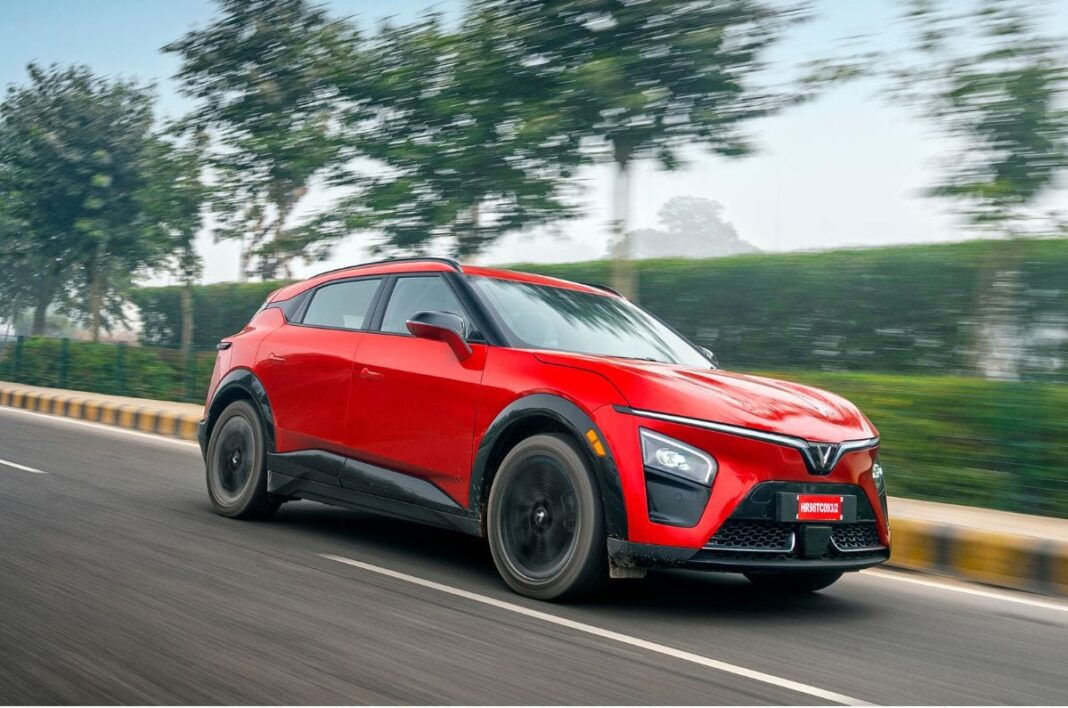

Vietnamese EV giant Vinfast has officially entered India with two electric crossovers – the Creta Electric-rivalling VF6 and the one you see in images here, the VF7. The VF7 takes on larger electric SUVs like the Tata Harrier EV and the Mahindra XEV 9e, and as such comes loaded with features, a potent 353hp AWD powertrain and a starting price tag just north of Rs 20 lakh. We’ve now finally got a chance to sample it on Indian roads to see what it’s like.
VF7 Exterior Design and Engineering –
Looks unassuming but has interesting details; has a longer wheelbase than rivals.
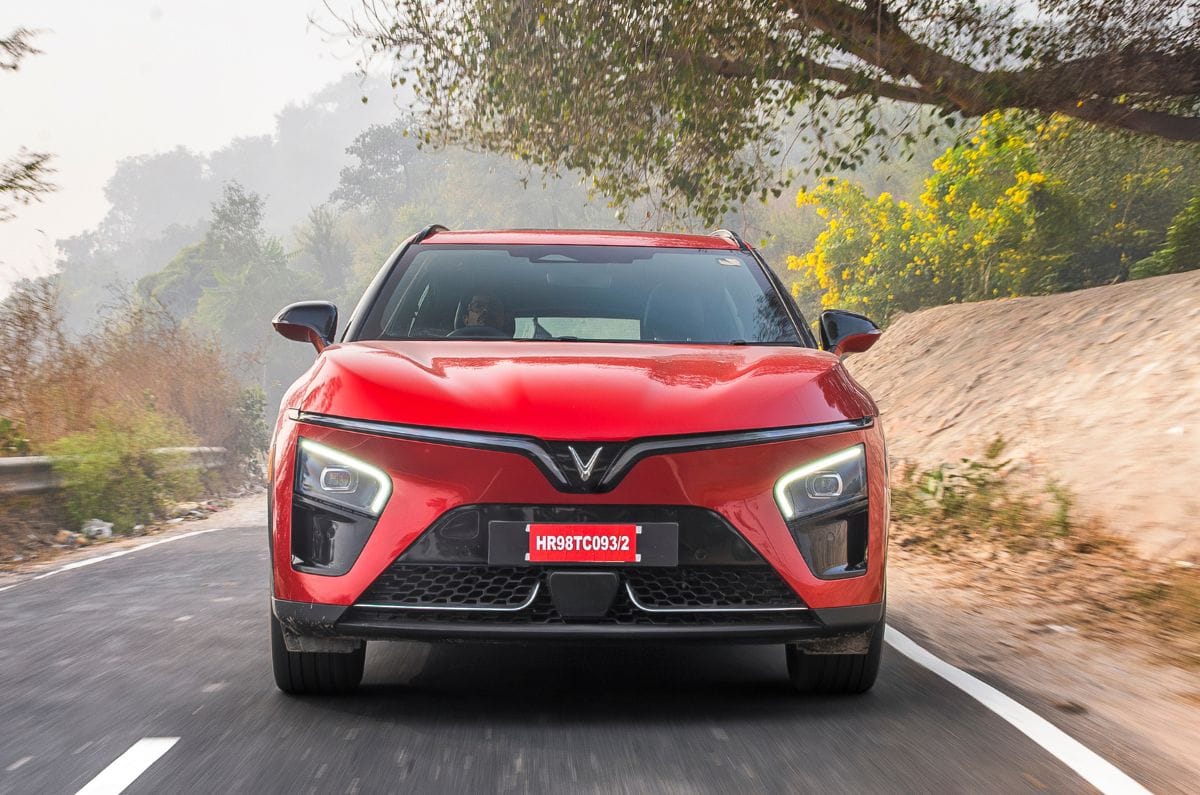
The Vinfast VF7 looks more a like a long, low-slung estate rather than a proper, upright SUV which buyers in this segment generally prefer. Still, it’s full of interesting details. Up front, there’s a V-shaped LED DRL which is a common design element with Vinfast’s cars, and it flanks the company’s logo in the centre. The main headlamp cluster is in the bumper and there’s a small grille lower down which feature silver, blade-like elements.
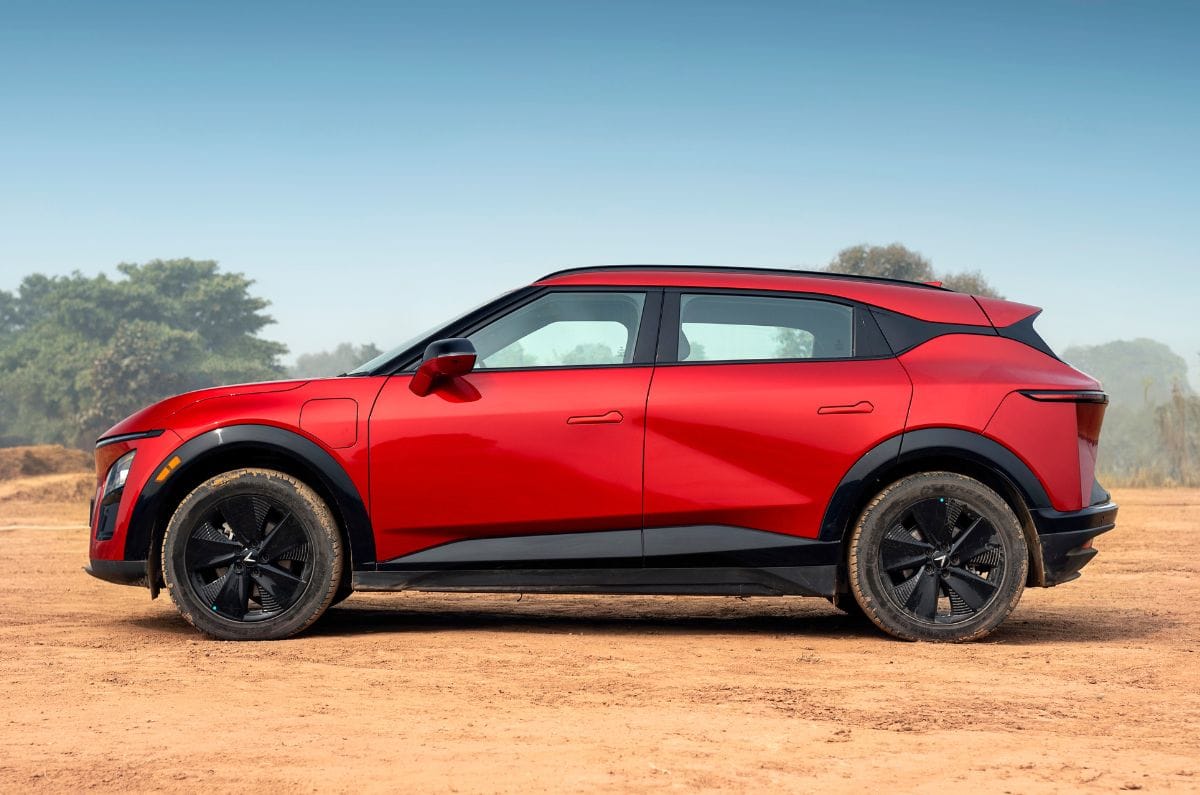
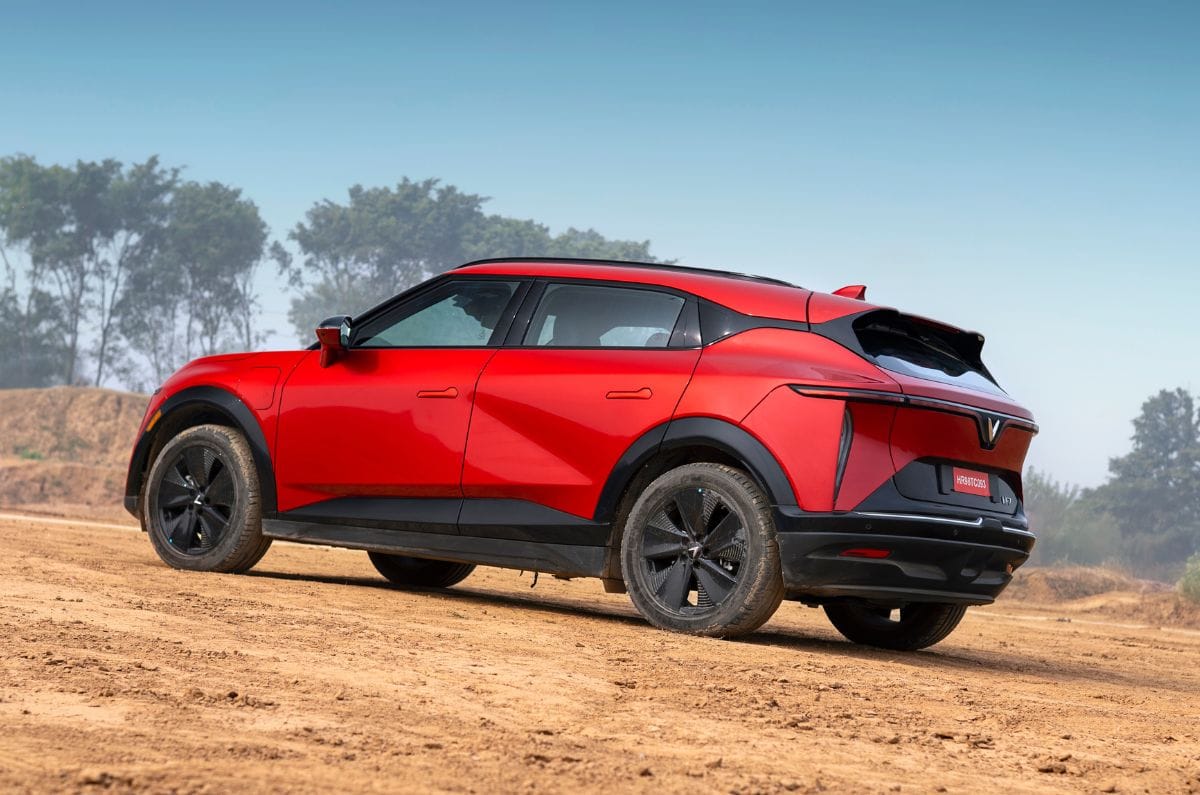
Over to the sides, there’s gloss black body cladding around the wheels and the lower part of the doors along with flush-fitting door handles. The 19-inch alloys feature an aero-optimised design and the pinched C-pillar lends it a floating roof effect.
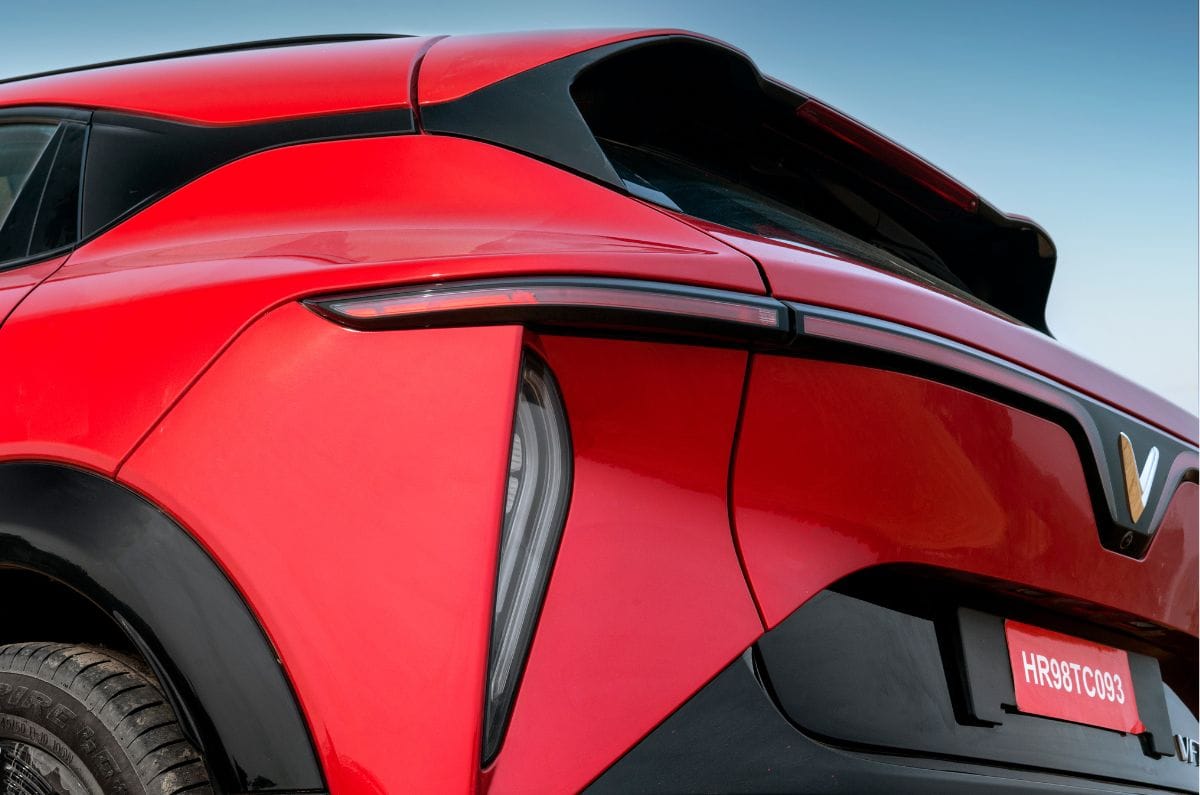
At the back, you get a raked windscreen on top of which sits spoiler. While this does look cool, it does hamper rear visibility from the inside. Like the front, the rear too features the V-shaped LED light bar that flanks the logo. The taillights are vertical units in the outer edges of the bumper and they feature some interesting LED detailing. Rounding off the look is thick, gloss black cladding in the lower portion along with some chrome detailing. On the whole though, while large enough with a unique design, it doesn’t have the wow factor or road presence that its rivals possess.
In terms of size, the VF7 measures over 4.5m in length, nearly 1.9m in width, over 1.5m in height and has a sizeable 2.8m-long wheelbase (longer than the XEV 9e and Harrier EV). The ground clearance too, is a generous 190mm.
VF7 Interior Space and Comfort –
Minimalist cabin is well-finished; has a spacious rear seat.
Inside the VF7, you’re greeted by a minimalist dashboard with a driver-oriented touchscreen taking centre stage. While the driver-centric layout does look cool, it makes accessing certain functions on the touchscreen tricky from the passenger side. There’s no conventional instrument cluster, instead you get a detailed heads-up display and the drive information is also relayed on to the touchscreen. The absence of a cluster also means you get a great view out of the cabin. Below the screen are the drive selector toggle switches which also include a ‘favourites’ button which can be assigned a specific function.
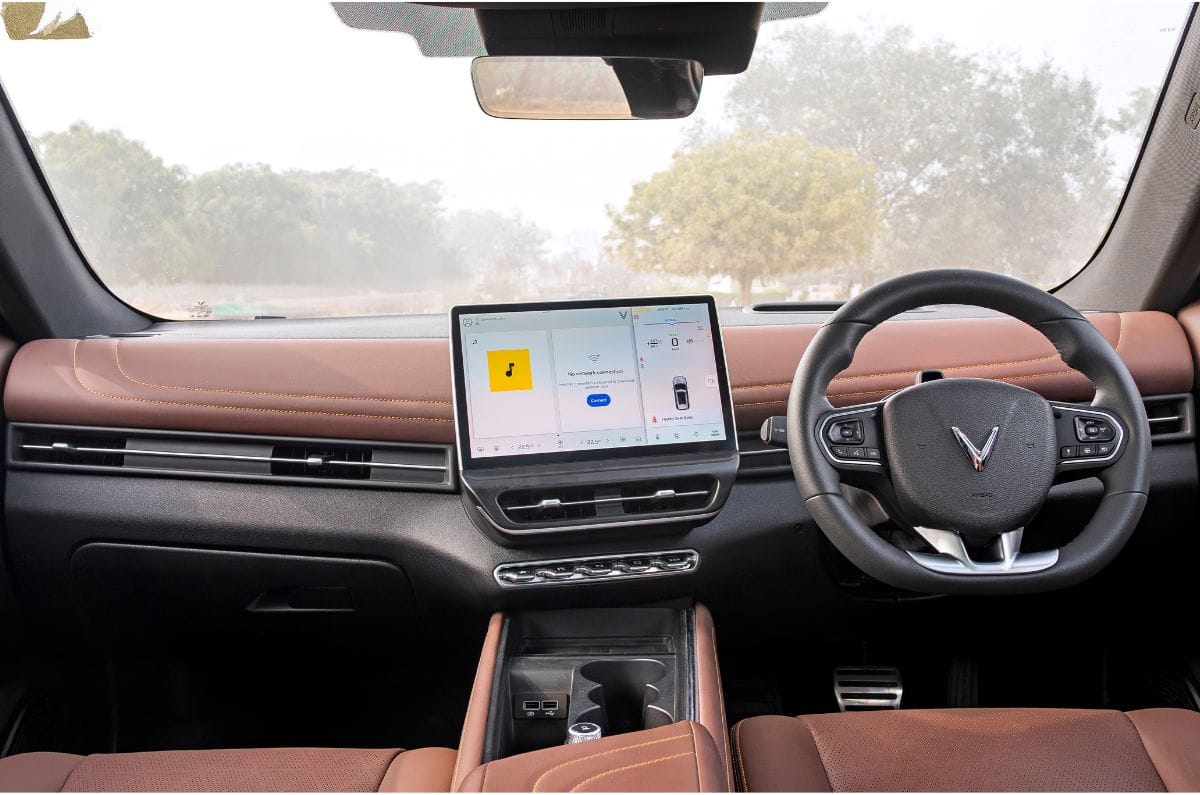
There’s a high centre console which houses the cupholders, the USB ports, a deep cubby space, the centre armrest and certain essential physical controls like the hazard lights, door lock/unlock and infotainment volume. There also a fairly large storage shelf under the centre console and the glovebox is a good size, too. However, though the door pockets can fit 1-litre bottles, they are too slim to hold much else.
The dual-tone brown and black upholstery with orange stitching lends the cabin a premium look and so do the vegan leather inserts on the dashboard and door cards, which are soft to touch. You’ll also find a few bits from the BMW parts bin like the indicator stalks and door handles. However, some of the plastics in here feel hard and scratchy. Still on the whole, the cabin impresses with its fit/finish levels, but like the exterior, lacks the requisite wow factor.
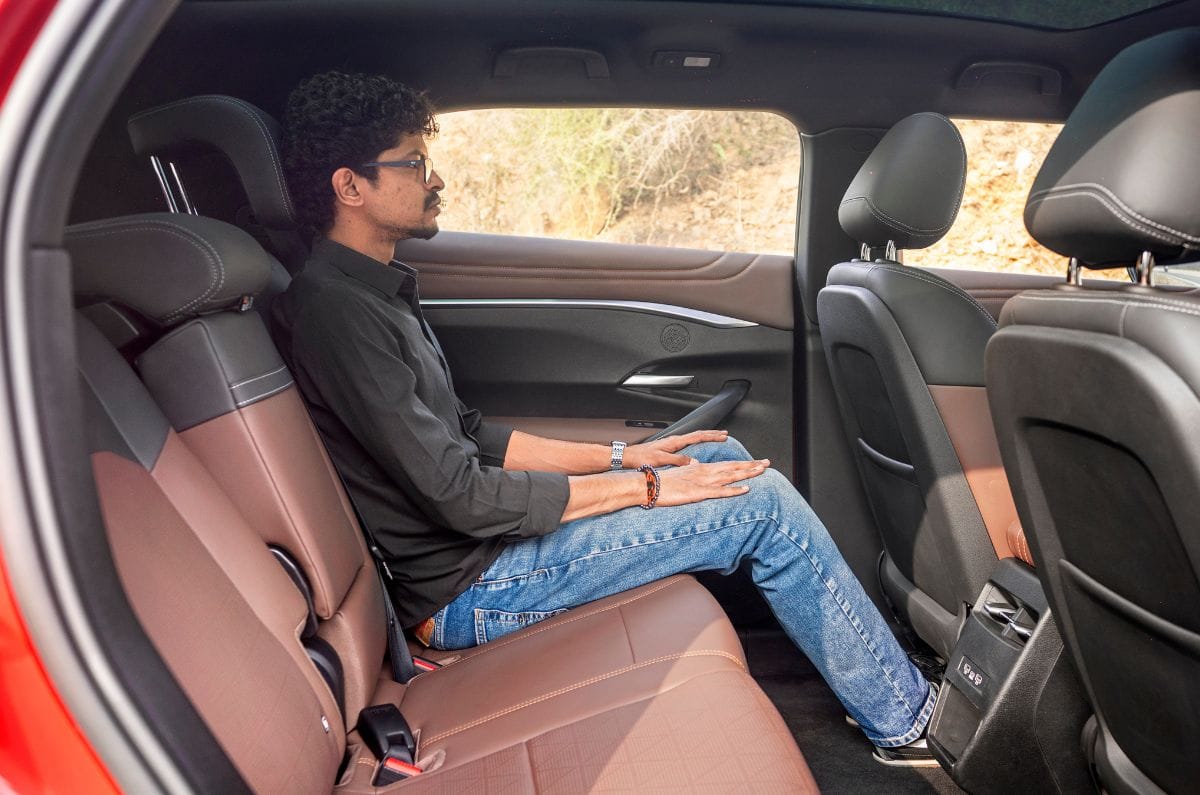
The rear seat is incredibly spacious thanks to that long wheelbase, with acres of legroom and headroom. You do sit a bit knees-up and taller passengers may find the under thigh support a bit lacking but it isn’t very noticeable as you have so much room to stretch your legs forward. The windows are set high and are narrow which can make you feel hemmed in though the panoramic glass roof, which extends right till the rear, does help the sense of space back here. In terms of features back here, you get dedicated AC vents and USB ports, seatback pockets, a fold-down centre armrest with cupholders and adjustable head restraints and three-point seatbelts for all occupants.
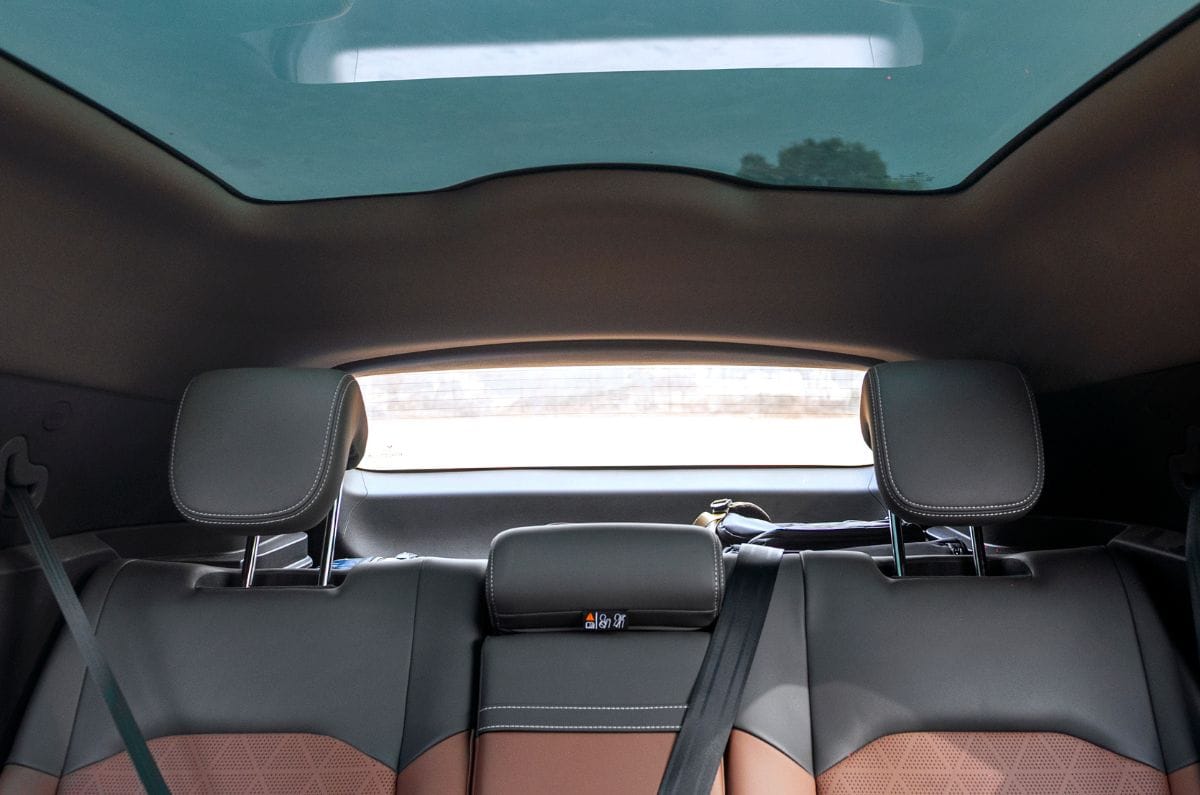
The boot is a cavernous 537 litres and can fit in a lot and you can even split-fold the rear seat for even more room. However, the boot is quite shallow and you don’t get a spare tyre, nor do you get a front trunk.
VF7 Features and Safety –
Gets all features expected in its class like a panoramic glass roof, large touchscreen and ADAS tech.
Our test car was the top-spec Sky Infinity variant and as such was packed with all the goodies. Features include the 12.9-inch infotainment touchscreen, an 8-speaker audio system, dual-zone auto climate control, 8-way power adjustable driver’s seat, ventilated front seats, vegan leather upholstery, a heads-up display, wireless charger, a panoramic glass roof, a powered tailgate, LED lights all around, an auto-dimming IRVM and much more.
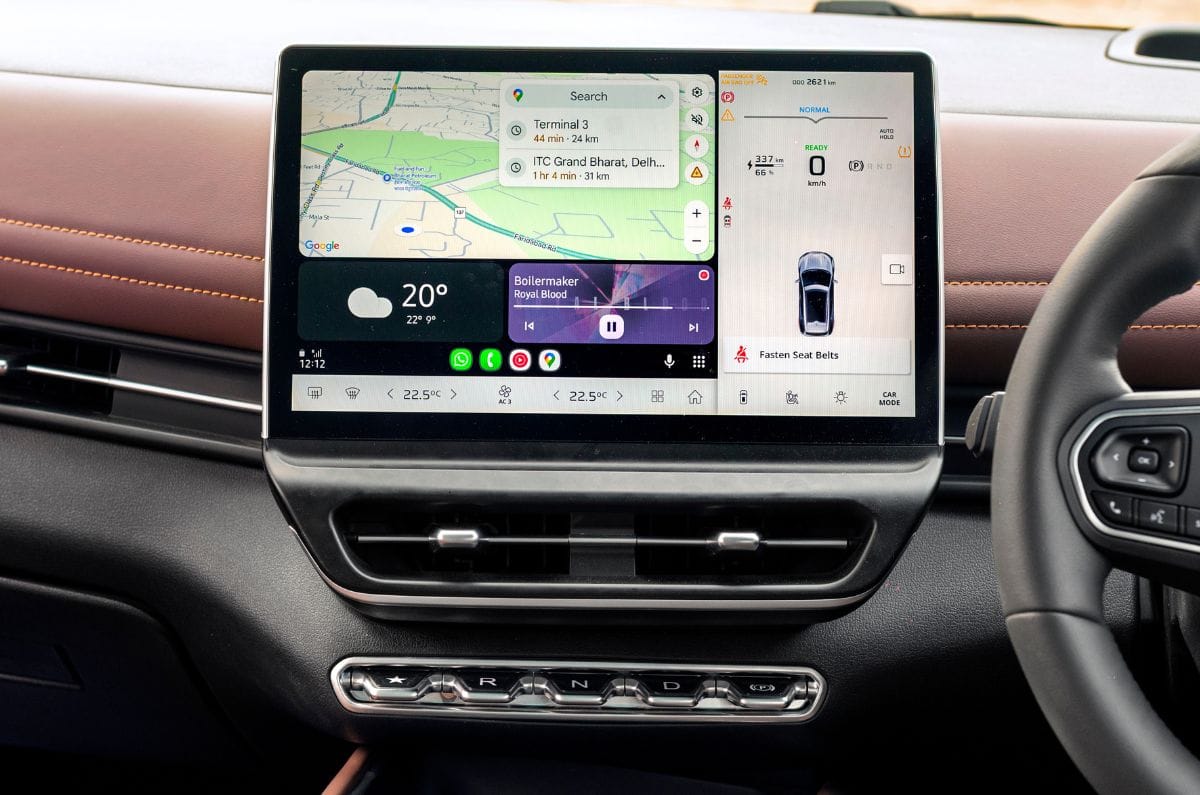
The touchscreen itself packs in on board games to keep users entertained while charging, it has special modes like ‘Car wash mode’, ‘Valet mode’ and ‘Pet mode’ and it is even capable of OTA updates. The system has an easy-to-understand UI and it’s bright in colour but it can feel a bit slow to respond to inputs. It has also swallowed almost all the controls for the car, including things like adjusting the wing mirrors, which is an inconvenience.
As for safety kit, you get 7 airbags, a tyre pressure monitor, a 360-degree camera, adjustable headrests and three-point seatbelts for all passengers and auto headlamps and wipers. It also packs in radar and camera based ADAS tech, bringing in features like adaptive cruise control, auto emergency braking, lane keep assist, lane departure warning and much more. In our brief drive, the ADAS features didn’t seem too intrusive and well calibrated to our driving conditions.
VF7 Performance and Refinement –
AWD packs in blistering performance; some road and tyre noise is audible at higher speeds.
The entry-level VF7 Earth gets a 59.6kWh battery, a front-wheel-drive setup, and produces 177hp and 250Nm, while the mid-spec Wind and Wind Infinity both come with a larger 70.8kWh battery, front-wheel drive, and 204hp with 310Nm. As mentioned, the version we tested was the range-topping Sky Infinity AWD which has an electric motor on each axle, with the combined output being 353hp and 500Nm.
With those numbers on hand, the VF7 is of course seriously quick. In our preliminary tests, the AWD VF7 completed the 0-100kph sprint in just 6.02sec. The VF7 spins its wheels a good deal when launched hard and it continues to pull relentlessly well in to triple digit speeds. Roll-on acceleration is impressive too, with 20-80kph taking 3.19sec and 40-100kph taking 3.94sec.
But what’s nice is that the powertrain is well calibrated and it feels manageable at low speeds, as long as you’re sensible with your inputs. And there’s always more than enough power in reserve for when you want to make a quick overtake. There’s three drive modes too – Eco, Normal and Sport – and they do have a corresponding effect on throttle response and steering weight.
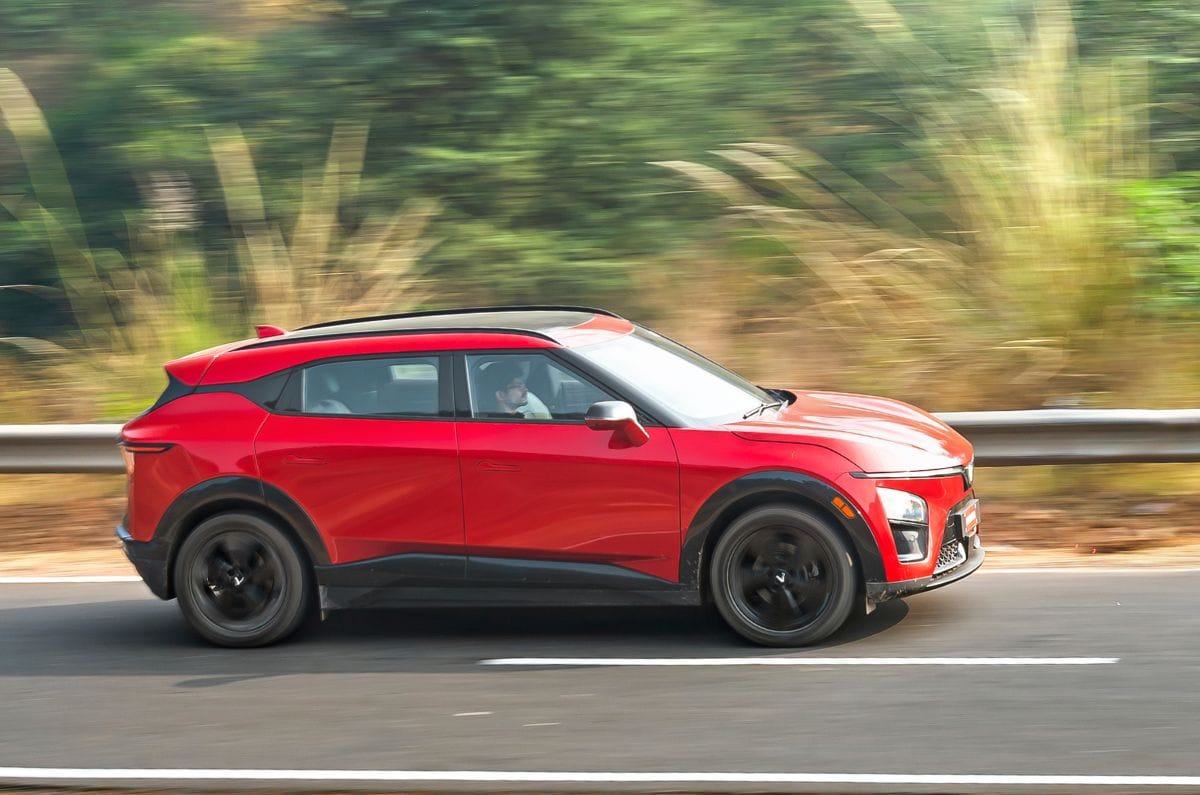
The cabin is also well isolated from motor and wind noise but some road and tyre noise does filter through at higher speeds. We also didn’t get a chance to test the braking (80-0kph) but the pedal felt consistent and the stopping power was ample to bring this big, 2,218kg EV to a halt.
VF7 Mileage / Range and Efficiency –
AWD with the 70.8kWh battery has a claimed range of 510km.
The Vinfast VF7 AWD only comes with the larger 70.8kWh battery, while the entry-level Earth variant gets a 59.6kWh unit. In our short test drive, we didn’t get a chance to subject the VF7 to our real-world range test but Vinfast claims that the VF7 AWD will do 510km on a single charge.
As for charging, it can be topped up using a 7.2kW AC charger or a 110kW DC fast charger, the latter of which can take it from 10-70% in 28 mins. A 10-year/2 lakh km warranty is standard on the VF7 and its battery pack, which is commendable.
VF7 Ride Comfort and Handling –
Feels stable at higher speeds and around corners; low speed ride feels firm.
The Vinfast VF7 rides with the stability and maturity we generally would associate with European cars. In the interest of ride comfort, Vinfast has downsized the VF7’s wheels from 20-inchers to 19-inchers for India. However, low speed ride still feels firm and the VF7 can feel unsettled over large bumps. This improves greatly as speeds rise though, with the VF7 feeling planted out on the highway at higher speeds.
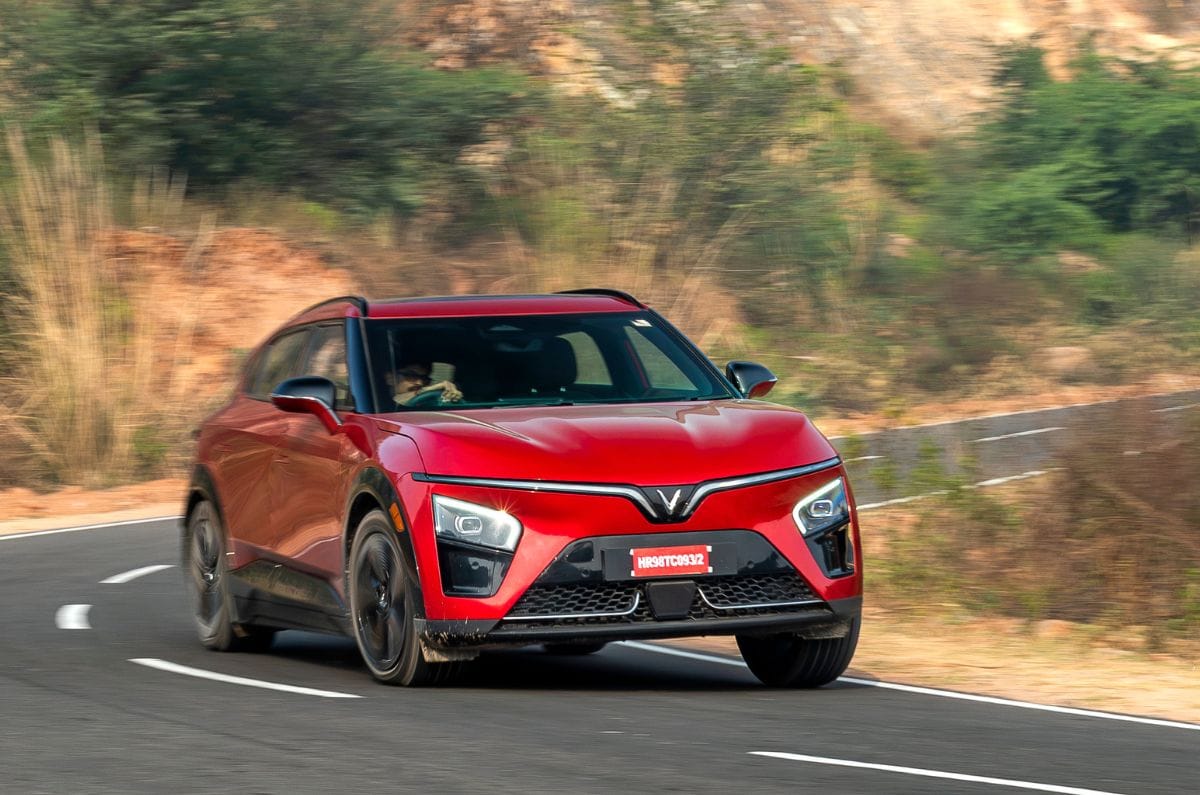
Thanks to its long wheelbase (2,840mm), the VF7 doesn’t feel very agile around bends. That said, it is predictable and will hold its line accurately around corners. There’s also a decent amount of grip from the tyres and the body roll is kept well in check. The steering too has a good amount of heft too it in Sport mode.
VF7 Value for Money –
Packs in a lot of performance and features for a very attractive price.
The Vinfast VF7 is priced between Rs 20.89 lakh and Rs 25.49 lakh (ex-showroom), comfortably undercutting the Mahindra XEV 9e (Rs 22.65 lakh – 31.25 lakh) and the Tata Harrier EV (Rs 21.49 lakh – 30.23 lakh). As such, it represents really exceptional value for money considering all that it packs in.
The VF7’s styling may not appeal to all, the touchscreen has swallowed too many basic functions and Vinfast’s after sales experience remains to be seen, but there’s a lot more this EV gets right. It comes packed with convenience and safety features, the rear seat is very spacious which will appeal to the chauffeur-driven, it has serious performance on tap and it even comes with the option of All Wheel Drive. What the VF7 represents is a new and unique proposition that’s big on space, big on features and aggressive in terms of pricing, which is exactly what Vinfast needs from its flagship product to gain a foothold in our market.
Location Courtesy – Tandem Hills