
The promise of an affordable electric future is something many automakers have been working to achieve. Tesla has done much of the hard work with its Model 3. Unlike similarly cheap EVs which came before it, the Model 3 boasted a genuinely usable and somewhat impressive range, along with a decent set of standard features, and it did all this while still managing to sell at a reasonably accessible price. It was the first mass-produced, affordable EV that didn’t make consumers compromise to own and use it.
Here’s the really interesting part. Since their launches, Tesla’s Model 3 and Model Y have received price drops. As Chinese EVs gained in popularity across the globe, Tesla had little choice but to cut prices to remain competitive. However, most Tesla models still sport a starting price in the region of $50,000 — still way out the realm of affordability for many of us. Meanwhile, Chinese motorists get to drive around in brand-new EVs with price tags under $10,000.
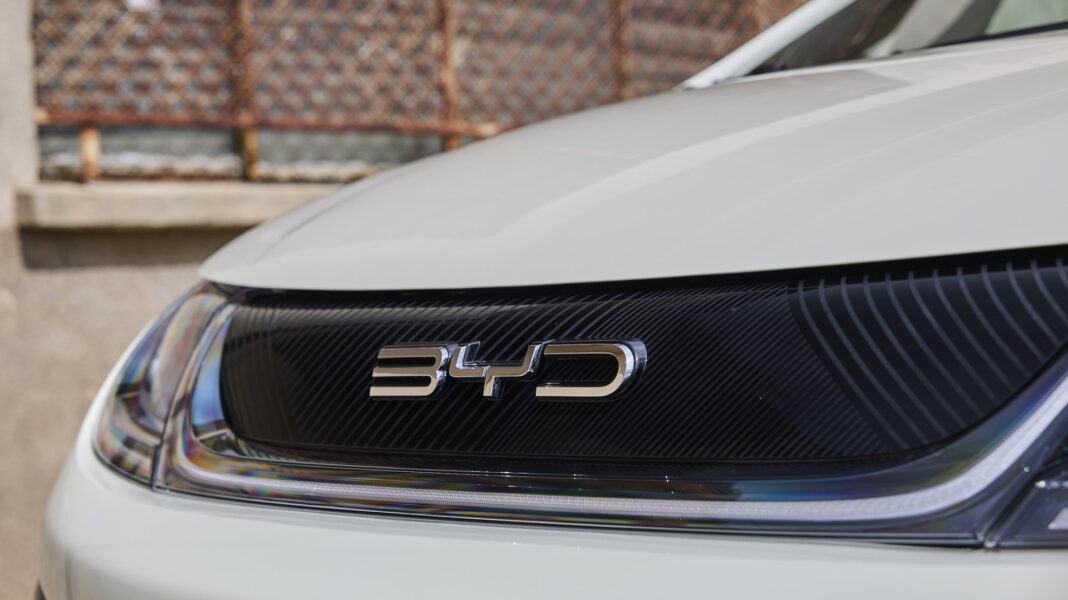
That’s a reality we’re miles from realizing in the U.S. In fact, one of the cheapest EVs here is the newly released Nissan Leaf, with a $29,990 starting price, itself subject to various delivery fees and charges. That’s three times the price of BYD’s bargain Seagull. What’s the catch? Is $10,000 something we can replicate in the U.S.? Erm, no, sorry. There are a handful of reasons why not, from safety regulations to production issues and, of course, political differences between the U.S. and China.
China subsidizes EV production
Regardless of how cheap labor costs are, and how convenient it is that EV components can be manufactured in-house, screwing together a retail-ready electric vehicle and being able to turn a profit by selling it at $10,000 or so is incredible. As the old saying goes, if something sounds too good to be true, then it probably is. And guess what, this is.
BYD and other Chinese EV manufacturers haven’t simply found a way to produce cars at a mere fraction of the cost of American automakers. Government subsidies are giving them the financial boost they need in order to deliver models like the Seagull at the price they’re using. It’s been reported that the Chinese government has handed out a minimum of $3.7 billion of subsidies to BYD alone.
Car companies in the Western world were on the back foot to start with, given China’s cheaper production costs, but throw in a few billion dollars worth of government support, and it’s not just an uneven playing field, it’s a totally different sport. We’ve reported that China could be ditching EV subsidies soon, but these handouts aren’t the only reason there will never be a $10,000 EV on U.S. soil.
The implementation of tariffs
First, the Trump administration removed the $7,500 federal tax credits scheme for EV buyers, and then it followed up by introducing tariffs. Initially, a 25% tariff was introduced for cars produced outside of the U.S., and this was soon followed by an equal tariff on imported car parts.
Even the most American automaker sources parts from across the globe for EV production, so these tariffs haven’t only hiked the prices on foreign cars, but on domestic models like those from Tesla and GM. Now, let’s ignore the fact that Chinese EVs aren’t sold in America, and instead, we’ll pretend they are available. How will these new tariffs influence pricing?
Take the sub~$10,000 BYD Seagull, as an example. While other countries have to work around a 25% tariff, EVs made in China are being slapped with a 100% tariff. So before we factor in any other costs, such as covering staff wages in the U.S., dealership costs, transport fees, etc., the Seagull now sports a price more in the realm of $20,000. Again, that’s even before it lands on U.S. shores. Sure, the U.S. could drop these tariffs and welcome Chinese EVs, but what damage would that cause to the American auto industry? Even if those tariffs were dropped, a fresh set of equally challenging hurdles would soon be facing the Chinese EVs.
Safety regulations
Arguably the toughest of those hurdles would be U.S. safety regulations. Chinese EVs aren’t built with these regulations in mind, and why would they be? After all, if they’re effectively banned from being sold on American shores, jumping through such hoops seems pointless. However, it’s another reason why we will likely never see the likes of BYD’s $10,000 Seagull selling Stateside.
To understand how close these EVs were to meeting U.S. safety standards, the American company Caresoft Global purchased a Seagull and shipped the car to its U.S. offices for closer inspection. The Associated Press reported that according to Caresoft’s president — Terry Woychowski, a former General Motors big-truck chief engineer — BYD’s cars would require modifications and further testing to pass the stricter safety tests in America. In fact, Woychowski said, the price would likely rise by $2,000 or so in the case of the Seagull.
Now, many Chinese EVs are global models that sell throughout Europe, so it stands to reason that they could pass U.S. safety tests with relative ease, but this won’t be without modification to both the cars and their prices. Remove government subsidies, add in those tariffs, and fork out for these tests and safety modifications, and cheap EVs like the Chevy Bolt and Nissan Leaf start looking like bargains again.
Transport and production costs need to be taken into consideration
Take politics and regulations out of the equation, and we’re still left with costs all businesses need to consider when launching and pricing a product. Selling EVs on your factory’s doorstep is great, as there’s very little transportation cost to take into consideration, but who’s going to foot the bill for transport when thousands of BYDs and Jaecoos need shipping to the U.S.? The customers, of course. Businesses are just that, and they need retail prices to reflect the real costs of getting a product to market.
Chinese automakers also will need to consider where they will sell their products. Many Chinese automakers in Europe currently piggyback on already established brands, such as Stellantis-owned marques, selling from their pre-existing showrooms. This same approach might also work in the U.S. If it doesn’t, Chinese automakers will have to factor in the cost of building and developing their own dealer networks, and fairly quickly, too.
These Chinese automakers are huge, but the cost of establishing themselves in the U.S. is also huge — think marketing, staff recruitment … it all adds up. And we still haven’t gotten to arguably the biggest reason why we’ll never see $10,000 Chinese EVs on our roads.
Would we even buy it?
The BYD is small, very small. It measures just 149 inches long and 68 inches wide, and sits 62 inches high. By way of comparison, the Fiat 500e sizes up at 143 inches in length, 66.3 inches wide, and 60.2 inches high. Slightly smaller, but pretty comparable.
Now, a 500e costs north of $30,000 by some margin, and the sales figures suggest that the public just doesn’t see it as a compelling option. Sure, we might drive the 500e if it was free, or extremely cheap, but otherwise, we aren’t that interested. Small cars don’t do that well in the U.S.; we prefer pickup trucks and SUVs, and that isn’t anything new. So what’s to say that most of us would even be interested if a dirt-cheap Chinese EV landed on our shores?
$10,000 might be crazy cheap for a brand-new car, but the Seagull sports only 75 horsepower, and a range of roughly 190 miles, are buyers actually getting that much value? We recently asked Jalopnik readers what used car they would buy with $10,000, and while some answers were a little adventurous, most of you admitted that a Camry, Accord, Corolla, or similar would fill the void in your driveway. These larger, well-established, known entities offer heaps more practicality than a miniature $10,000 Chinese EV ever would, which suggests, even if one did exist on these shores, we probably still wouldn’t buy it.